 Image Credit: GIUSEPPE CACACE / Contributor / Getty
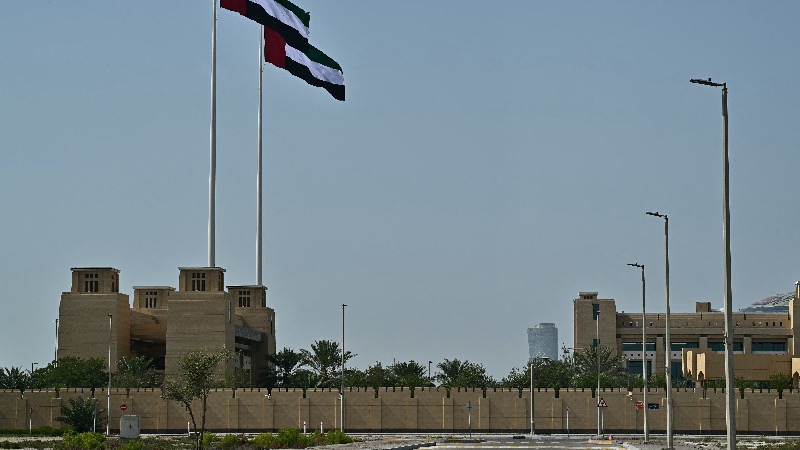
On Wednesday representatives from Moscow and Kiev met in Abu Dhabi, the United Arab Emirates to attempt peace negotiations in a forum mediated by Washington. The Ukrainian Secretary of the National Security and Defense Council Rustem Umerov described the meeting as “productive” despite territorial secession issues remaining unsolved – the key issue preventing peace. These discussions will carry on into Thursday.
Secretary of State Marco Rubio described the fight over land which is holding up negotiating an end to the conflict.
“It’s still a bridge we haven’t crossed,” Rubio said. “There’s active work going on to try and see if both sides’ views on that can be reconciled.”
Specifically, Moscow wants Kiev to remove its soldiers from the Donbas (in the eastern part of the country). The Kremlin also asks that former Ukrainian land gained throughout the conflict be internationally recognized as Russian.
Kiev refuses to cede the entire Donbas, although the country’s Dictator Vladimir Zelensky did say he would be willing to consider alternative arrangements, such as the withdrawal of Ukrainian forces from portions of the east and the establishment of a demilitarized zone.
Washington has urged Kiev to cede the Donbas, promising security guarantees in return for the secession.
“Russian Presidential aide Yury Ushakov described territory as the ‘main question’ of the negotiations but said other issues also remain unresolved. U.S. envoy to NATO Matthew Whitaker also called territorial matters the most difficult part of any deal,” RT said.
Kiev described Wednesday as “substantive and productive” and said the teams “focused on concrete steps and practical solutions.”
After the trilateral meeting in Abu Dhabi, the negotiation process continued today in a working-group format.
Alongside me, the Ukrainian delegation included Kyrylo Budanov, Davyd Arakhamia, Serhii Kyslytsia, Andrii Hnatov, Vadym Skibitskyi, and Oleksandr Bevz.
On the U.S. side, the consultations were attended by Steve Witkoff, Jared Kushner, and Josh Gruenbaum, as well as Daniel Driscoll and General Alex Grynkewich. The Russian side was represented at a high military level.
The work was substantive and productive, focused on concrete steps and practical solutions.
We are preparing a report for President Volodymyr Zelenskyy.
Adding tension to the peace process, on Tuesday NATO Secretary General Mark Rutte spoke about the likelihood of Western troops being deployed to a post-war Ukraine – a dealbreaker for the Kremlin.
“Some European allies have announced that they will deploy troops to Ukraine after a deal is reached,” Rutte said Tuesday. “Troops on the ground, jets in the air, ships on the Black Sea. The United States will be the backstop.”
The Western military bloc is even mulling the establishment of a bank to finance a war against Russia.
Rhetoric in Western Europe appears to be shifting on the war however. On Tuesday French President Emmanuel Macron announced that Ukraine’s European backers are preparing to resume dialogue with Russian President Vladimir Putin. Italian Prime Minister Giorgia Meloni and German Chancellor Friedrich Merz have also expressed interest in speaking to the Kremlin. This shift is noteworthy as Ukraine’s European enablers have been the driving force behind the continuation of the war.
President Donald Trump announced Tuesday that Russian President Vladimir Putin had indeed observed a requested ceasefire (due to harsh winter conditions).
Washington has been seeking to bridge the gap between the two warring nations for over a year now in various iterations of diplomatic forums.
While the first set of talks in this series took place in late January 2026 and ended with minor results, territorial issues remained unsolved.
Throughout 2025 Washington hosted events where it played the middleman between Moscow and Kiev, although any progress made during those meetings quickly vanished with European aid money to Ukraine.
In May the White House announced it wanted direct meetings between Moscow and Kiev, threatened to leave the negotiating table, but later began mediating the talks again. In June the two warring nations did manage bilateral meetings in Turkey, but those negotiations failed to bring about peace.
U.S. efforts climaxed in November when a Washington-drafted 28-point peace plan was attempted, but Ukraine refused the offer.
The Guardian listed the officials who attended Wednesday’s meeting:
Ukraine and Russia are sending high-level delegations. Ukraine’s team includes Kyrylo Budanov, the former head of military intelligence who now serves as the head of the presidential administration, David Arakhamia, a trusted negotiator, and Andrii Hnatov, the chief of the general staff. The Russian delegation is led by Igor Kostyukov, the head of the GRU military intelligence service, alongside other intelligence officials and the Kremlin special envoy Kirill Dmitriev.
The image of Budanov and Kostyukov facing each other is striking: as former and current intelligence chiefs, both have overseen covert campaigns against their rival services, with Ukraine having eliminated several senior GRU figures during the war.
From the U.S. side, the special envoy Steve Witkoff and Jared Kushner, Trump’s son-in-law, are expected to attend. The two men have become fixtures in US diplomacy, shuttling between the Middle East, the Iran crisis and the war in Ukraine, but have been criticised for their lack of formal diplomatic experience.
Alex Jones Exposed Epstein’s Cloning Facility In 2019