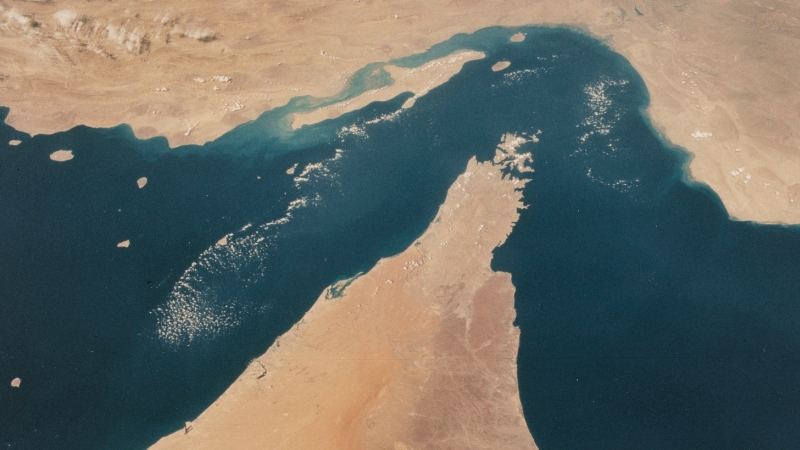
 Image Credit: Space Frontiers / Stringer / Getty Images
Several US warships transited the Strait of Hormuz for the first time since the war with Iran began, as peace negotiations got under way in Pakistan.
According to sources who spoke to Axios, the move was not coordinated with Iran and was intended to increase the confidence of commercial ships to cross the Strait.
“This was an operation that focused on freedom of navigation through International waters,” a US official said.
Earlier this week, a US official admitted that ships were not crossing the Strait because they were afraid of being attacked.
On Saturday, President Trump posted on Truth Social that the threat a ship might “bunk” into sea mines was the only weapon Iran had to prevent them from crossing the Strait.
“We’re now starting the process of clearing out the Strait of Hormuz as a favor to Countries all over the World, including China, Japan, South Korea, France, Germany, and many others.”
The reopening of the Strait, through which 20% of all the world’s oil and gas exports pass, is a key US demand.
At present, US efforts to negotiate an end to the war have amounted to nothing beyond a temporary ceasefire.
After nearly a full day of negotiation in the Pakistani capital Islamabad, in a terse statement Vice President JD Vance said the Iranian delegation had rejected US terms.
“We have been at it now for 21 hours, and we’ve had a number of substantive discussions with the Iranians. That’s the good news,” Vance said.
“The bad news is that we have not reached an agreement, and I think that’s bad news for Iran much more than it’s bad news for the United States of America.”
The talks began four days after President Donald Trump agreed a two-week ceasefire with Iran.
According to Vance, the main stumbling block was Iran’s refusal to abandon its nuclear ambitions.
“The simple question is, do we see a fundamental commitment of will for the Iranians not to develop a nuclear weapon, not just now, not just two years from now, but for the long term. We haven’t seen that yet. We hope that we will,” Vance said.
Before the meeting, Iran submitted a list of ten proposals. President Trump did not agree to the proposals, but said they were a “workable basis” for negotiations.
Vance ended his remarks to the press by saying, “We’ve made very clear what our red lines are, what things we’re willing to accommodate them on, and what things we’re not willing to accommodate them on.”