 Image Credit: Md Ariful Islam / Getty
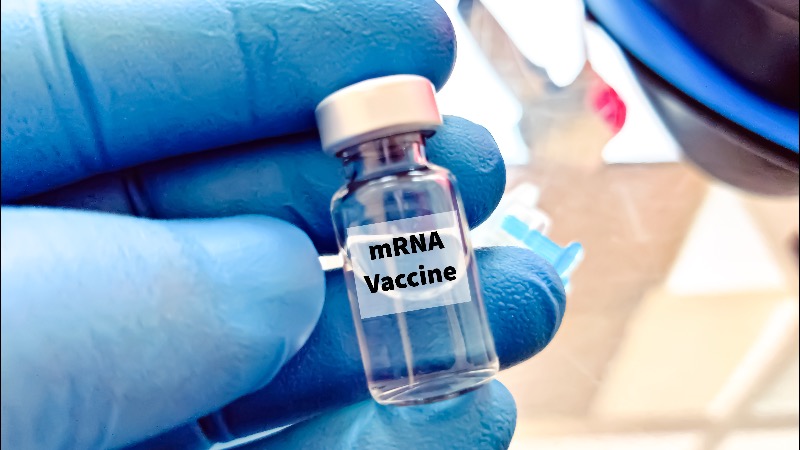
In February, the U.S. Food and Drug Administration (FDA) made waves after it declined to review the Phase 3 clinical trial data for Moderna’s mRNA flu vaccine. One week later, the FDA reversed course — and by early March, the agency’s vaccines head, Dr. Vinay Prasad, was gone.
The events occurred amid a broader shift away from vaccine-related messaging — by the Trump administration and the “Make America Healthy Again” (MAHA) movement — leading up to this year’s midterm elections.
The messaging shift disappointed many MAHA activists and led the administration to try to shore up MAHA support.
Some analysts have suggested that polls showing lukewarm public support for stricter vaccinepolicies contributed to the administration’s decision to pivot away from vaccine messaging.
But some medical freedom advocates have questioned those polls. They suggest instead that lobbying by influential investors — specifically, Blackstone — has more to do with the shift in messaging and policy than public opinion.
Blackstone launched $750 million investment in Moderna
Blackstone, a New York-based investment firm, is the world’s largest alternative assets manager, with a portfolio exceeding $1 trillion. In 2024, the company launched an ongoing, $750 million investment in Moderna, explicitly to support the development of its mRNA flu shot.
Aside from its financial might, Blackstone is also closely connected to the Republican Party and the Trump administration, through significant donations from its executives and employees and through its ties with prominent lobbying firms linked to Republicans — and Big Pharma.
In turn, Blackstone’s CEO and co-founder, Stephen A. Schwarzman, has close ties to President Donald Trump and his administration, while members of Blackstone’s Life Sciences division have ties with several vaccine makers, including Pfizer.
Toby Rogers, Ph.D., a fellow at the Brownstone Institute, told The Defender that Prasad “defended scientific norms when he rejected Moderna’s flawed application earlier this year.”
“If the Moderna mRNA flu shot is approved due to political pressure from a large donor to the Republican Party, it will be one of the most extreme examples of regulatory capture in U.S. history,” Rogers said.
“When a private equity firm with a $750 million stake in a specific vaccine product has documented ties to senior administration officials and their lobbyists, that represents a textbook conflict of interest,” said Sayer Ji, chairman of the Global Wellness Forum and founder of GreenMedInfo.
“The public deserves transparency about whether those relationships influenced the FDA’s reversal on Moderna’s flu vaccine application,” Ji said.
Blackstone stands to profit from Moderna’s mRNA flu shot if approved
When announcing its $750 million investment in Moderna in 2024, Blackstone said the funding would “support innovative mRNA technology” — specifically, “Moderna’s influenza (‘flu’) program.”
According to Blackstone’s March 2024 announcement, its Life Sciences division would manage the funds — and would cash in from the future commercial success of the vaccine.
“If successful, [Blackstone Life Sciences] will be eligible to receive milestones and royalties on resultant flu products,” Blackstone stated. “Moderna will recognize the funding as a reduction in research and development expenses and will retain full rights and control of the Company’s influenza program.”
Fast-forward to February 2026. In a Feb. 3 “refusal-to-file” letter, signed by Prasad, the FDA informed Moderna that it would not review its application for its new mRNA flu vaccine — a decision that “shocked” Moderna.
At the time, Prasad was director of the FDA’s Center for Biologics Evaluation and Research, which oversees vaccines.
The FDA declined to review Moderna’s application, even though Moderna completed late-stage clinical trials for the vaccine. Moderna claimed the trials did not identify any safety or efficacy concerns.
But the FDA said Moderna failed to perform an “adequate and well-controlled” clinical trial, and that the trial did not use the “best-available standard of care.”
A week later, the FDA reversed course and announced it would review Moderna’s application for its mRNA flu shot. According to The Guardian, the FDA’s earlier rejection “prompted criticism across the medical industry” and “intensified worries” about changes in vaccine policy under the Trump administration.
The Guardian reported at the time that the FDA set Aug. 5 as the target date for completing its review of Moderna’s application, “which could allow the vaccine to be available before the next flu season begins.”
By early March, Prasad announced his departure from the FDA, effective late April. According to The Associated Press (AP), Prasad had “come under fire from pharmaceutical executives, investors, members of Congress and other critics for multiple decisions at the agency.”
AP reported that among these decisions was the FDA’s initial refusal to review Moderna’s mRNA flu shot.
“The rejection of the application, highly unusual for the FDA, prompted Moderna to go public with Prasad’s decision and vow to formally challenge it,” AP reported.
According to AP, Prasad’s departure “follows a string of high-profile controversies involving the FDA’s review of vaccines, gene therapies and biotech drugs in which companies have criticized the agency for reversing itself, in some cases calling for new trials of products previously greenlighted by regulators.”
In May 2025, Prasad announced a “radical framework” for overhauling the vaccine approval process. In a leaked November 2025 memo, Prasad said changes were coming to the framework under which flu vaccines are evaluated.
Key Blackstone figures maintain close Pharma, Trump administration ties
Blackstone Life Sciences is a key component of Blackstone’s $1 trillion investment portfolio. It focuses on providing financing to life sciences companies in exchange for royalties or other future benefits. The fund manages $15 billion in assets. Last month, it secured $6.3 billion in capital commitments.
According to Blackstone, its Life Sciences division has an 86% approval success rate for “Phase III assets.” Blackstone states that this figure outperforms the industry’s average.
Aside from its 2024 deal with Moderna, Blackstone Life Sciences partners with other vaccine manufacturers, including Merck, Teva Pharmaceutical Industries, Novartis and Alnylam Pharmaceuticals.
In 2020, Blackstone Life Sciences inked a $2 billion deal with Alnylam Pharmaceuticals to fund RNA interference (RNAi) therapeutics, an RNA-based technology related to but distinct from mRNA.
Several of Blackstone Life Sciences’ key figures have ties to pharma. Olivier Brandicourt, a senior adviser, was formerly CEO of Sanofi and Bayer HealthCare, and also held executive roles at Pfizer. Brandicourt serves on the board of directors of Alnylam, Dewpoint Therapeutics and vaccine maker Vaxcyte.
Blackstone’s CEO doesn’t have notable Big Pharma connections — but he does have ties to the current and previous Trump administrations.
In 2016, shortly after Trump’s electoral victory, Schwarzman was named chair of the President’s Strategic and Policy Forum, “an advisory group of business leaders providing input on economic growth, job creation, and policy.”
The forum, which also included representatives from BlackRock, Walmart, Disney and the Cleveland Clinic, disbanded in 2017.
According to Blackstone, Schwarzman “also participated in other White House business advisory efforts, including during the early COVID-19 response.”
By 2021, Schwarzman had distanced himself from Trump, publicly condemning the Jan. 6 events at the Capitol and offering to help “Biden and his team” to respond to the economic challenges posed by the COVID-19 pandemic.
But in 2024, Schwarzman endorsed Trump, expressing support for his economic, immigration and foreign policy platforms. Last year, Schwarzman helped facilitate negotiations between the Trump administration and Harvard, which the administration targeted for its “woke” admissions and academic policies.
Schwarzman’s Trump ties may have helped influence broader financial support from Blackstone’s executives and employees for Republican-aligned political action committees (PACs) — exceeding $48 million in 2024, according to OpenSecrets and including Schwarzman’s $5 million donation last year to the MAGA Inc. super-PAC.
During the COVID-19 pandemic, Blackstone implemented vaccine mandates for its employees, making vaccination a prerequisite for returning to in-person work in its U.S. and U.K. offices in 2021.
In 2022, Blackstone required its in-person employees to get COVID-19 boosters — after the U.S. Supreme Court struck down the Biden administration’s vaccine mandate for privately owned businesses.
Jeffrey Tucker, president and founder of the Brownstone Institute, said Blackstone is “part of a suite of gigantic private equity funds that came about following the cheap credit market after 2008,” who “gained enormous power, far beyond what banks themselves could marshal.”
“Their focus was always on maximum profitability through repeated revenue models running on subscriptions. This is why they became so interested in vaccines and the mRNA platform generally. It was never about health and always about maximum returns,” Tucker said.
Blackstone lobbyists represent Pfizer, Big Pharma trade groups
Blackstone has made a significant investment in lobbying, including with help from pharma-aligned lobbyists.
One such lobbyist is Jeff Miller, founder and CEO of the lobbying firm Miller Strategies. Miller maintains close lobbying ties with Big Pharma. One of his key clients is Pfizer, which paid Miller Strategies $480,000 for its services in 2025, according to OpenSecrets.
Another Miller Strategies client is the Pharmaceutical Research and Manufacturers of America (PhRMA) — a key pharma industry trade group. PhRMA paid Miller Strategies $240,000 last year, according to OpenSecrets.
Miller Strategies also counts pharma companies Roche, Bristol-Myers Squibb, Eli Lilly and Amgen among its clients. According to STAT News, Miller Strategies has seen “increased business from pharma giants seeking influence amid policy shifts” in the past year, listing the firm as one of three lobbying groups that “stand out.”
In 2020, Miller Strategies also played a key role in lobbying for the Coronavirus Aid, Relief, and Economic Security Act, also known as the CARES Act.
The CARES Act is said to have included funds that incentivized hospitals to follow COVID-19 treatment protocols that included placing unvaccinated patients on ventilators or administering remdesivir and other controversial medications.
In 2020, Blackstone hired lobbyist David Urban, president of the American Continental Group, a Washington, D.C.-based lobbying firm, that was part of Trump’s reelection advisory committee in 2024.
Urban also has previous pharma ties. Until 2020, he represented Genentech, a biotech company and Roche subsidiary that was developing COVID-19 therapeutics.
Barbara Loe Fisher, co-founder and president of the National Vaccine Information Center, said the public is unaware of the full extent of corporate and lobbyist influence over vaccine policy and law. She said:
“It is not just pharmaceutical industry money that influences national and state vaccine policymaking and law, which is facilitated by lawmakers elected to Congress and state legislatures, but the influence of money from an increasing number of other private industries and institutions, like medical trade groups, academic and philanthropic organizations with political agendas, Big Tech, and financial investment firms.”