 Image Credit: picture alliance / Contributor / Getty
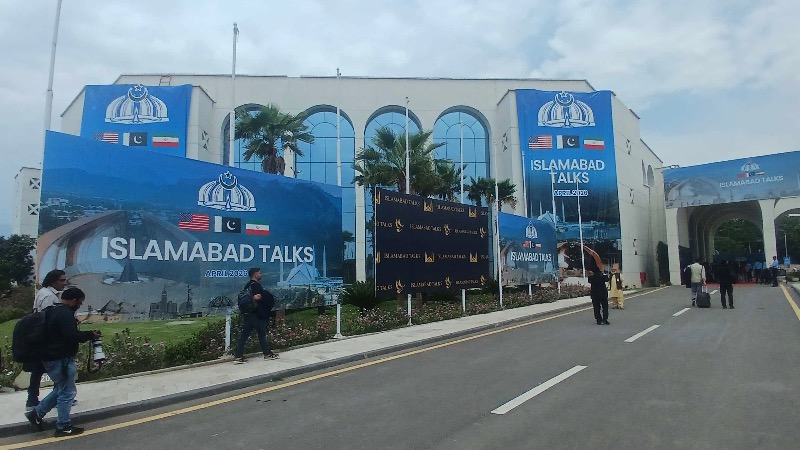
On Tuesday President Donald Trump told The New York Post that U.S./Iranian negotiations “could be happening over next two days” in Islamabad, Pakistan.
The talks have been ongoing but got derailed after Israel continued fighting following the April 8 ceasefire.
The Post said:
In an initial phone interview, Trump had claimed that discussions were “happening, but, you know, a little bit slow” before indicating that a second round of direct negotiations to end the seven-week war would likely happen somewhere in Europe.
About half an hour later, Trump called back with an update.
“You should stay there, really, because something could be happening over the next two days, and we’re more inclined to go there,” he said of Islamabad. “It’s more likely, you know why? Because the field marshal is doing a great job.”
It is not yet clear who will represent the U.S. negotiating team, but Trump had previously been using his special envoy Steve Witkoff and son-in-law Jared Kushner, something that has cast doubt as to the negotiation’s authenticity.
Trump told The Post that he was not happy with some of the previous negotiation’s demands, explaining they did not go far enough.
“The president also indicated he was not pleased with reports that the U.S. had asked Iran to suspend its uranium enrichment program for at least two decades during this past weekend’s unsuccessful talks,” The Post said.
“I’ve been saying they can’t have nuclear weapons,” he said. “So I don’t like the 20 years.”
The Post asked about proponents suggesting a moratorium may encourage Iran make an agreement.
“I don’t want them [Iran] to feel like they have a win,” the President replied.
The previous talks in this series were arranged by retired Pakistani Lt. Gen. Muhammad Saeed. He said that Tehran has shown “flexibility” in regard to the issue of Uranium enrichment. Indeed before the war started Washington was open to allowing Iran enrich Uranium to levels below what’s necessary for nuclear weapons.
The Pakistani General said Iran must be given a deal that is not a defeat in order for it to accept it.
“Iran has to be able to take something back to its people that doesn’t look like a surrender,” Saeed said.
“A blockade won’t change Iran’s position,” Mohammad Marandi, an Iranian official who took part in the Pakistani-backed talks said. “Ending enrichment will not be accepted.”
Israel had derailed a previous effort by Trump to end the war. The Jewish State did this by continuing to bomb Lebanon.
Embed from Getty ImagesImage credit: TOPSHOT – A fireball rises from a building hit by an Israeli airstrike in the area of Abbasiyeh, on the outskirts of the southern Lebanese city of Tyre, on April 8, 2026. Lebanon’s army warned people against returning to the country’s south on April 8, where the Israeli military is still launching attacks, as Israel said the ceasefire with Iran did not include its conflict with Hezbollah. (Photo by Kawnat HAJU / AFP via Getty Images)
Bilderberg’s Climate/Energy Lockdown Plans