 Image Credit: Majid Saeedi / Stringer / Getty
On Monday it was reported that Tehran has been in talks with Washington over negotiating an end to the war, a claim Iran quickly came out to deny.
Last week President Donald Trump’s Special Envoy Steve Witkoff reportedly sent text messages to Iranian officials, including the country’s Foreign Minister Abbas Araghchi, exploring possibilities for resuming the negotiations.
“Because of decisions made by [Iran’s] top authorities, no response was sent to his messages,” a senior Iranian official told Drop Site. “The message here is clear: Iran has once again closed the window for any direct negotiations,” he added. “The authority to declare a ceasefire rests solely with the country’s Supreme Leader. It’s not something the foreign minister, or any other official or organization in Iran, would send messages about to a foreign party.”
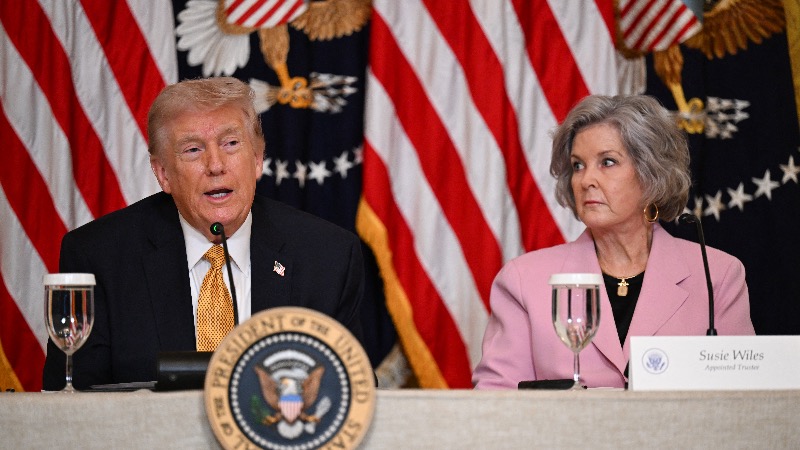
Trump said that the communication not only took place, but that Tehran wants to make a deal.
“They want to make a deal. They are talking to our people… we have people wanting to negotiate, [but] we have no idea who they are,” Trump told reporters Monday, also noting that he is open to the talks “because sometimes good things come out of it.”
It is possible that Iranian sources are feeding false information to Western media outlets.
In response to request for comment, a White House spokesperson sent Drop Site the following: “The radical, left-wing Drop Site News is clearly carrying water for the Iranian terrorist regime — and reports like these based on pure fiction and citing unnamed anonymous sources should be discarded immediately. Iran feeds this fake news media outlet propaganda and they publish it as fact, which is abhorrent, America Last behavior. Operation Epic Fury will continue unabated until President Trump, as Commander-in-Chief, determines that the goals of Operation Epic Fury, including for Iran to no longer pose a military threat, have been fully realized.”
Iran’s Foreign Minister said that his last contact with Washington was before the war began.
My last contact with Mr. Witkoff was prior to his employer’s decision to kill diplomacy with another illegal military attack on Iran.
Any claim to the contrary appears geared solely to mislead oil traders and the public.
Last week Iran and Israel both voiced an interest in continuing the war despite Trump appearing to look for an exit.
Iran is reportedly not interested in a temporary ceasefire because that could allow the U.S. and Israel to regroup and attack again. There is a similar concern about a ceasefire in the Russia/Ukraine war. Tehran now seeks a guarantee that a peace deal would be permanent, similar to Ukraine’s demands for security guarantees.
Iranian President Masoud Pezeshkian said Wednesday that he seeks a permanent deal against future aggression.
Talking to leaders of Russia and Pakistan, I reaffirmed Iran’s commitment to peace in the region. The only way to end this war—ignited by the Zionist regime & US—is recognizing Iran’s legitimate rights, payment of reparations, and firm int’l guarantees against future aggression.
On Monday NBC reported that the President is receiving various exit strategies during his war briefings, indicating Trump seeks to prevent Iran from becoming a forever war:
The timeline for the duration of the war “could change every day,” according to one of the people.
The off-ramps are built into daily war planning, along with options for escalation if the White House seeks to increase the pressure on Iran, according to the six people, who did not go into detail on what those plans look like.
White House press secretary Karoline Leavitt said in a statement that Trump and the Pentagon provided an initial assessment of between four and six weeks “to fully achieve the clear military objectives.”
“The U.S. military is doing a tremendous job and this timeline remains true. Ultimately, the operation will end when the commander in chief determines the goals have been fully realized and the threats posed by Iran have been eliminated,” she said.
But exit strategies have taken on a new significance as the administration wrestles with surging oil prices and questions grow on whether Iran will willingly lay down arms and agree to U.S. terms.
The Islamic Republic disregarded Trump upping his threats over Tehran placing mines in the Strait of Hormuz, instead reacting by taking control of the situation via keeping the end of the war on its timeframe, not Washington’s.
“Certainly we aren’t seeking a ceasefire,” Iranian parliament speaker Mohammad Bagher Ghalibaf, a former top Revolutionary Guards commander said Tuesday. “We believe the aggressor must be punished and taught a lesson that will deter them from attacking Iran again.”
According to CEO of World Independent News, Dominic Tripi, Tehran now refuses to negotiate “as long as an entity called Israel exists.”
On Tuesday the IRGC (Iranian Revolutionary Guard Corp) responded to Trump’s announcement that the Iran war is “complete” by saying Tehran will decide when the war is over, not Washington.