 Image Credit: Handout / Handout / Getty
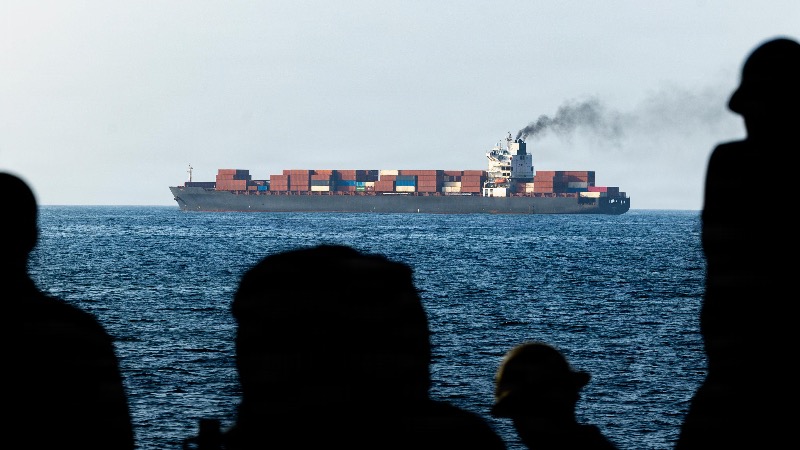
President Donald Trump rejected Tehran’s deal which would get the Strait of Hormuz open. Tanker ships are currently blocked from passing through the key energy chokepoint, causing an immense strain on the global economy.
On Sunday the Islamic Republic offered Washington a deal which would open the strait before negotiations over Iran’s nuclear program take place.
The proposal addressed the energy crisis which has arisen as a result of the strait’s closure as well as give more time for diplomacy over the nuclear program. The plan would however remove President Trump’s leverage over nuclear negotiations by lifting his blockade of the strait while also removing Iran’s leverage of keeping the strait closed.
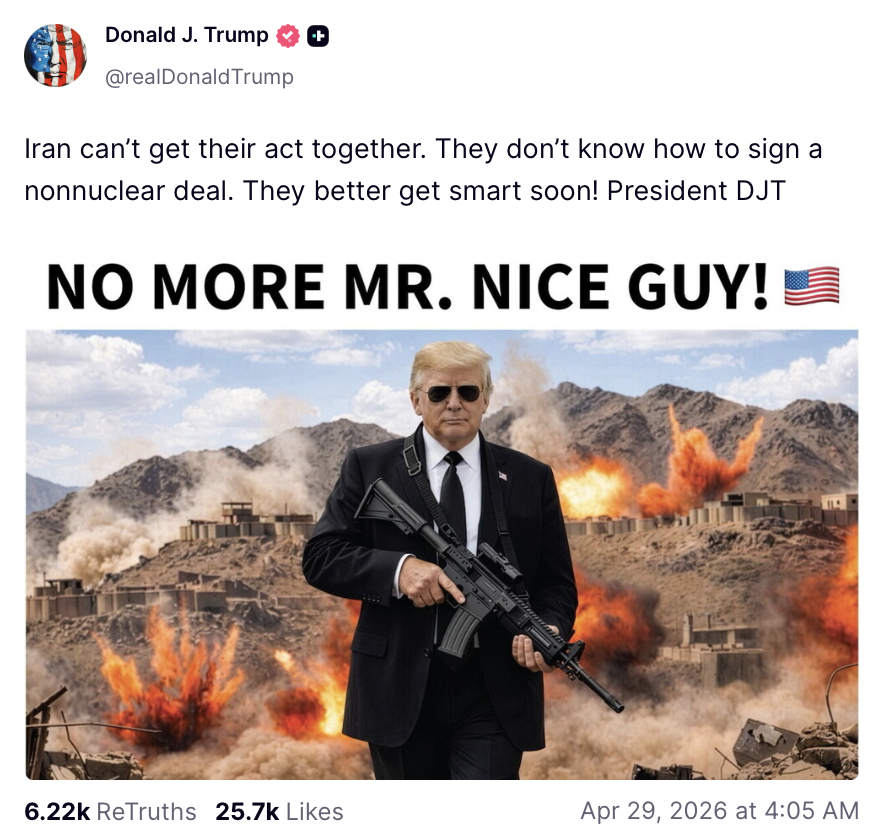
Trump posted a meme with a short message early Wednesday morning, rejecting the deal, citing his interest in tackling the nuclear negotiations up front:
Iran can’t get their act together. They don’t know how to sign a nonnuclear deal. They better get smart soon! President DJT
Trump is reportedly considering an Iran nuclear deal with many of the same points he criticized in Obama’s Iran nuclear deal (the JCPOA).
“Billions in frozen assets may be handed back to Iran. Agreements to limit Tehran’s nuclear program may eventually expire. And some of the same hard-line leaders who crushed nationwide protests in January could end up better-resourced than they were before President Donald Trump unleashed crushing airstrikes more than seven weeks ago,” The Washington Post said Wednesday.
Trump was unhappy with the 2015 Iran nuclear deal and withdrew from it during his first term in office.
“After a decade of fiercely attacking a previous deal with Iran, Trump, pursuing a way out of a war he launched, has authorized U.S. negotiators to consider a bargain that involves many of the same trade-offs one of his predecessors confronted,” The Washington Post said.
The 2015 Iran nuclear deal involved Obama shipping $400 million in cash on pallets to Tehran in exchange for the promise they will refrain from developing nuclear weapons.
It appears Washington was close to reaching a new nuclear deal with Iran before Israel dragged the U.S. into war.
On March 17 it was reported that British National Security Adviser Jonathan Powell had attended the final round of negotiations between the U.S. and Iran, and believed that the offer proposed by Iran “was significant enough to prevent a rush to war.”
Indeed, as Infowars reported at the time, the talks were going well enough to warrant a continuation of negotiations in Vienna, Austria the following week. Those talks never came, as Israel and the U.S. attacked Iran just days later. With that said, President Donald Trump did tell Iran that he was mulling military action.