 Image Credit: Hailshadow / Getty
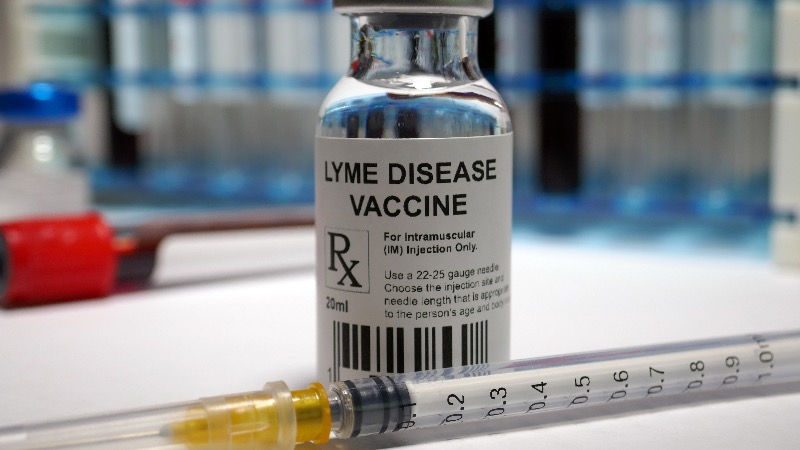
Pfizer said Monday that it plans to submit its experimental Lyme disease vaccine to the U.S. Food and Drug Administration (FDA) for approval, even though the drug failed to show conclusively that it was effective at preventing the disease.
Pfizer and its partner, French biotech company Valneva, said in a press release that late-stage trial results for the vaccine showed more than 70% efficacy in preventing infection.
However, they also said the drug failed to meet its primary endpoint — a standard clinical trial benchmark set in advance to determine whether a treatment is effective — to show that the efficacy claim was statistically robust.
Although the drug failed to meet the company’s own statistical cutoff for success, Pfizer said it plans to go ahead and submit the vaccine to the FDA because the results are “clinically meaningful,” and the company is “confident in the vaccine’s potential.”
Critics argue that redefining success after the drug failed the trial raises red flags.
Investigative journalist Paul D. Thacker wrote on X that the drug’s approval would be evidence that “Big Pharma runs America.”
Even pro-vaccine experts suggest FDA won’t approve the vaccine
Media outlets that routinely champion efforts to increase vaccine availability cited experts who doubted the FDA would approve a vaccine that failed to meet its own trial endpoints.
STAT quoted Dr. Kathryn Edwards of Vanderbilt University Medical Center, who said further studies are needed, and that it is “hard to know how this will be received at the regulatory agencies.”
Edwards, a well-known vaccinologist who served on the data-monitoring committee charged with ensuring the safety and efficacy of the Pfizer-BioNTech COVID-19 vaccine, previously worked as a paid consultant and adviser to Pfizer.
STAT also quoted Dr. Paul Offit, director of the Vaccine Education Center at Children’s Hospital of Philadelphia, who said he would like more information on the trial outcomes.
The Washington Post cited Dr. Robert Aronowitz, a physician and professor of history and sociology of science at the University of Pennsylvania who chronicled previous Lyme vaccine efforts.
Aronowitz told the Post he was “quite skeptical” Pfizer’s shot would have regulatory success.
Pfizer’s lyme vaccine less effective than GSK vaccine pulled from market
In 1998, the FDA approved GlaxoSmithKline’s Lyme vaccine, LYMErix. The company withdrew the drug from the market just four years later amid widespread public concern over serious side effects, including arthritis, and declining demand.
Over 100 people who suffered serious adverse events in the year following the drug’s approval filed a class action lawsuit against the company.
During the approval process, regulators also raised concerns about arthritis and other possible side effects, which they asked the company to study in its post-marketing analysis.
Other concerns raised at the time included the vaccine’s low efficacy rate of less than 80%, meaning 20% of fully vaccinated individuals could still contract the disease.
There were also concerns about safety in young children, duration of protection and the fact that people had to take three doses of the vaccine.
The vaccine Pfizer plans to submit for approval has lower efficacy and requires more doses than the vaccine that was pulled from the market. It hasn’t been studied in young children, and the duration of protection hasn’t been reported in the late-stage trials.
In the earlier Phase 2 trials for the shot, the vaccine saw a drop in protection after 18 months, indicating that vaccine recipients would need a booster.
Lyme vaccine could generate up to $1 billion in annual sales
The renewed push for a Lyme vaccine comes as reported infections continue to climb. The Centers for Disease Control and Prevention estimates about 476,000 Americans are diagnosed and treated for Lyme annually — with numbers rising as tick populations expand.
The illness, transmitted to humans through the bite of infected blacklegged ticks, is “caused by the bacterium Borrelia burgdorferi and rarely, Borrelia mayonii.”
Typical symptoms of the illness include rashes, fever, chills, headache, fatigue, muscle and joint aches and swollen lymph nodes.
Lyme disease can be treated effectively and rapidly with antibiotics. However, if left untreated, it can cause damage to joints, facial palsy or drooping and other serious issues.
In July 2017, the FDA issued biotech company Valneva a fast-track designation that specifically allowed for expedited review of “drugs to treat serious conditions and fill an unmet medical need,” such as Lyme disease.
In 2020, Valneva sold the rights to its Lyme vaccine to Pfizer for $130 million, and the companies announced a collaboration for the continued development and commercialization of the vaccine.
Valneva estimates the vaccine could generate more than $1 billion in annual sales if approved, CNBC reported. Pfizer anticipates an overall revenue of $60 billion this year, including $5 billion from its COVID-19 vaccine.
The Lyme vaccine — known as LB6V (formerly VLA15) — requires four doses over more than a year. It targets six strains of the Lyme-causing bacteria.
The vaccine is being tested in North America and Europe in a large Phase 3 trial involving 9,400 participants age 5 and older who received either the drug or a saline placebo, according to CNBC.
The trial originally enrolled approximately 18,000 people, but the companies cut about half the participants after learning of alleged violations in clinical practice standards by Care Access, a subcontractor conducting some of the clinical trials, the Vineyard Gazette reported.
The companies said they didn’t observe any safety concerns in the trial. They have not yet published the trial results.