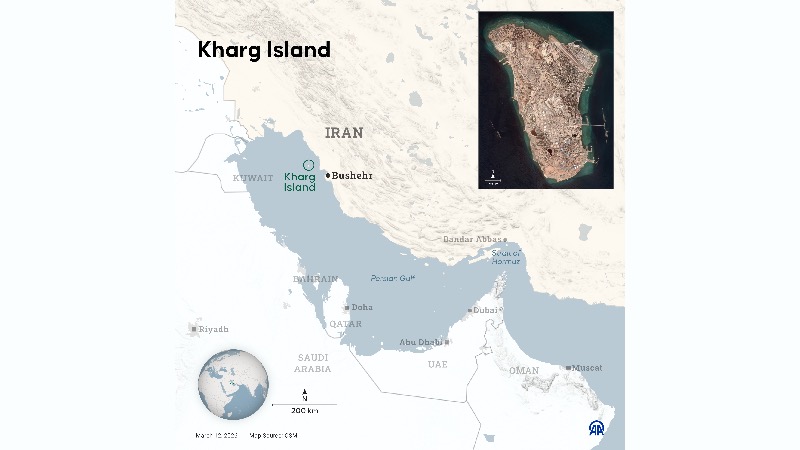
 Image Credit: Anadolu / Contributor / Getty
On Saturday night it was reported that unnamed U.S. officials told The Washington Post the Department of War is preparing for weeks of potential ground operations in Iran. The media website said that this could spark off a “dangerous new phase” of the conflict, should President Donald Trump choose to escalate it.
“Any potential ground operation would fall short of a full-scale invasion and could instead involve raids by a mixture of Special Operations forces and conventional infantry troops, said the officials. All spoke on the condition of anonymity to discuss highly sensitive military plans that have been in development for weeks,” The Washington Post said. “Such a mission could expose U.S. personnel to an array of threats, including Iranian drones and missiles, ground fire and improvised explosives. It was unclear Saturday whether Trump would approve all, some or none of the Pentagon’s plans.”
A similar report from Axios on Thursday said that the Department of War is preparing for “massive final blow” against the Islamic Republic which will likely include ground forces and a massive bombing campaign. That news website cited two unnamed U.S. officials and two “sources with knowledge.”
Zoom in: In interviews with Axios, officials and sources familiar with the internal discussions describe four major “final blow” options Trump could choose from:
- Invading or blockading Kharg Island, Iran’s main oil export hub.
- Invading Larak, an island that helps Iran solidify its control of the Strait of Hormuz. The strategic outpost hosts Iranian bunkers, attack craft that can blow up cargo ships and radars that monitor movements in the strait.
- Seizing the strategic island of Abu Musa and two smaller islands, which lie near the western entrance to the strait and are controlled by Iran but also claimed by the UAE.
- Blocking or seizing ships that are exporting Iranian oil on the eastern side of the Hormuz Strait.
Similar to the Axios article, The Washington Post said a possible target was Kharg Island and its valuable oil infrastructure. In addition, officials told The Post that another potential ground operation could be “raids into other coastal areas near the Strait of Hormuz to find and destroy weapons that can target commercial and military shipping.”
It appears that all the ground operations which are being considered are centered around the Strait of Hormuz, not the entire nation of Iran.
Embed from Getty ImagesImage credit: ANKARA, TURKIYE – MARCH 11: An infographic titled “Kharg Island” created in Ankara, Turkiye on March 11, 2026. (Photo by Elif Acar/Anadolu via Getty Images)
“Seizing Iranian territory will embarrass the Iranian regime and create valuable bargaining chips in future negotiations, this official said. The biggest challenge, the official added, will be protecting any U.S. forces holding territory,” The Post said.
On Friday President Donald Trump said more than 3,500 targets remain while speaking at the Future Investment Initiative Priority Summit.
“Now we’re just going after targets. Again, they have no anti-aircraft, so we’re just floating over the top looking for whatever we want, and we’re hitting it,” Trump said. “We have another 3,554 targets left, and that’ll be done pretty quickly. And then, you know, at some point, we’re going to have to determine what we do. But they have never seen anything like it.”
The same day Secretary of State Marco Rubio told European leaders that the war will last 2-4 more weeks.
As opposed to airstrikes, ground operations carry with them a higher risk to the military personnel.
“Such a mission could expose U.S. personnel to an array of threats, including Iranian drones and missiles, ground fire and improvised explosives. It was unclear Saturday whether Trump would approve all, some or none of the Pentagon’s plans,” The Post said.
Thousands of U.S. soldiers and Marines are now in the region, indicating the potential for a ground operation.
After June’s Strike On Iran’s Nuclear Program, Alex Jones Predicted FULL WAR Will Follow