 Image Credit: Anadolu / Contributor / Getty Images
The US Navy will now begin blockading Iran via the Strait of Hormuz, US Central Command (CENTCOM) confirmed on Sunday.
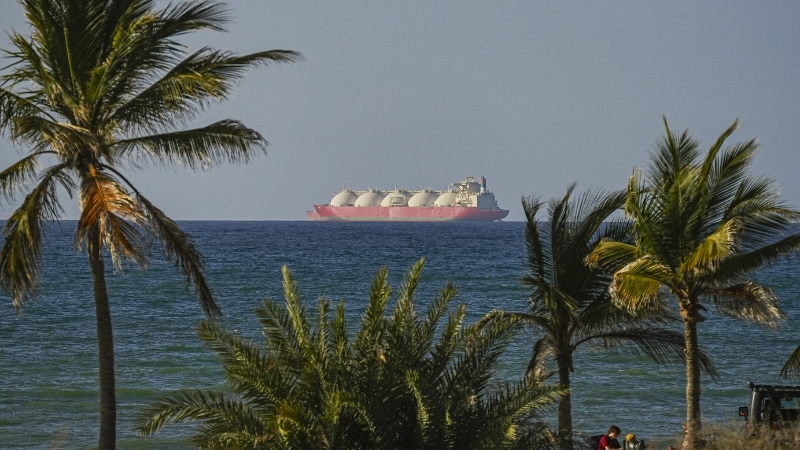
In a post on X, CENTCOM said the blockade would begin today and would target “all maritime traffic entering and exiting Iranian ports” in the Strait of Hormuz, the vital passage through which 20% of the world’s oil and natural-gas exports pass under normal circumstances.
“The blockade will be enforced impartially against vessels of all nations entering or departing Iranian ports and coastal areas, including all Iranian ports on the Arabian Gulf and Gulf of Oman,” the post said.
CENTCOM added that US military forces will not interfere with freedom of navigation for vessels traveling in the Strait, as long as they aren’t visiting Iranian ports.
“Additional information will be provided to commercial mariners through a formal notice prior to the start of the blockade. All mariners are advised to monitor Notice to Mariners broadcasts and contact U.S. naval forces on bridge-to-bridge channel 16 when operating in the Gulf of Oman and Strait of Hormuz approaches.”
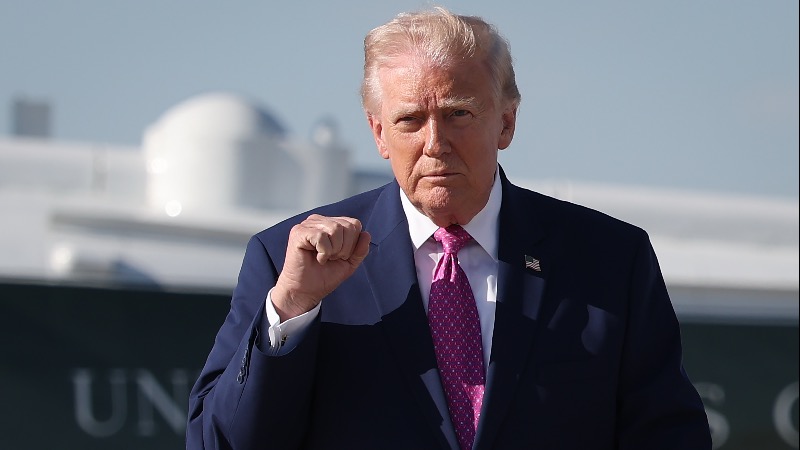
President Trump announced the blockade in a post on Truth Social earlier on Sunday, after the failure of negotiations between Vice President JD Vance and Iranian representatives, in Pakistan.
Trump said he told the US Navy to “seek and interdict every vessel in International Waters that has paid a toll to Iran. No one who pays an illegal toll will have safe passage on the high seas.”
He also said other nations would be involved in enforcing the blockade, but didn’t name them.
Iran’s Revolutionary Guards responded to President Trump’s announcement by saying the Strait remained under Iran’s “full control” and that any foreign military vessels would receive a “forceful response.”
After the failure of Saturday’s negotiations in Islamabad, Vice President Vance addressed the media and issued a statement.
“We have been at it now for 21 hours, and we’ve had a number of substantive discussions with the Iranians. That’s the good news,” Vance said.
“The bad news is that we have not reached an agreement, and I think that’s bad news for Iran much more than it’s bad news for the United States of America.”
The talks began four days after President Donald Trump agreed a two-week ceasefire with Iran.
According to Vance, the main stumbling block was Iran’s refusal to abandon its nuclear ambitions.
“The simple question is, do we see a fundamental commitment of will for the Iranians not to develop a nuclear weapon, not just now, not just two years from now, but for the long term. We haven’t seen that yet. We hope that we will,” Vance said.
Before the meeting, Iran submitted a list of ten proposals. President Trump did not agree to the proposals, but said they were a “workable basis” for negotiations.