 Image Credit: LUKE FRAZZA / Staff / Getty
As President Donald Trump and Secretary of War Pete Hegseth work to restore the focus of America’s military on lethality and warfighting, one of their major tasks has been to reform the institutions that train our military leaders.
In recent news, Secretary Hegseth has decreed that military officers may no longer attend fellowships or government-sponsored degree programs at Harvard University, and he is apparently looking to expand that ban list beyond Harvard into colleges and universities nationwide that teach the desirability of toxic policies such as Marxism, DEI, and the myth of anthropogenic climate change. The rationale here is simple. America’s military exists to close with and destroy our nation’s enemies, and for no other reason. The toxic brew of politicized beliefs taught at the Ivy League institutions of 2026 detracts from and degrades that military mission, and they cannot be tolerated in uniform.
That’s a great start, but there is much more to do on this front. Perhaps no task is more important in this vein than reforming the military’s Senior Service Colleges (also known as War Colleges). Our War Colleges have lost their way, as they each strive to be a sort of government-run Ivy League university instead of a training ground for lethal strategic warfighters. As a graduate of one of those War Colleges, I cannot emphasize enough just how important reform of these vital institutions is to our nation’s defense.
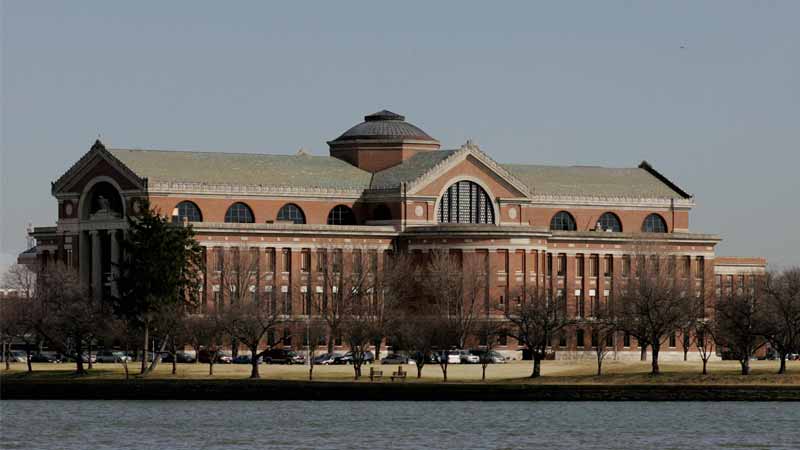
For the uninitiated, there are six War Colleges. They are: (i) the National War College (Fort McNair, Washington, DC); (ii) the Dwight D. Eisenhower School for National Security & Resource Strategy (Fort McNair, Washington, DC); (iii) the Army War College (Carlisle Barracks, PA); (iv) the Naval War College (Newport, RI); (v) the Air War College (Maxwell Air Force Base, AL); and (vi) the Marine Corps War College (Quantico, VA). These War Colleges serve to train America’s senior military leaders to assume future positions of strategic importance.
The students are generally promotable lieutenant colonels (or promotable Navy and Coast Guard commanders) or full colonels (or Navy and Coast Guard captains). The schools also admit senior civilians from across the federal government. The National War College and the Eisenhower School are both “joint” schools (i.e., students are from all military services), and the other colleges are service-specific, although they too admit a number of students from the other military services. The War Colleges also admit students from allied foreign militaries.
For a career military officer, selection for attendance at a War College is a significant milestone, as graduates of these schools tend to attain positions of great responsibility, all the way up to the highest, four-star flag ranks. The intent of the War Colleges is to prepare their students for managing national defense at the strategic level. As an example, the mission statement of the National War College reads as follows:
“The National War College mission is to educate joint, interagency, and international leaders and warfighters by conducting a senior-level course of study in national security strategy, preparing graduates to function at the highest levels of strategic leadership in a complex, competitive, and rapidly evolving strategic environment.”
Sounds about right, doesn’t it? We want our senior military leaders to be well-trained on the strategic aspects of national security, right? The problem is that while the school’s name and the description of its students include the word “war,” the description of the mission itself does not. That is the problem.
In my experience as a War College graduate, and in the experience of so many other graduates I know, the War Colleges’ primary purpose seems to consist of seeing just how closely they can resemble civilian Ivy League universities, and the curriculum is skewed to the sorts of globalist, neo-Marxist, woke doctrines that infest political science and economics programs in those Ivies. Don’t believe me? My War College sent eleven of my colleagues and me to China for two weeks to study the effects of climate change (all the while accompanied by minders from the Chinese Communist Party). It was an interesting trip and a great life memory, but it had very little to do with my military career mission of fighting wars.
Despite right-sounding descriptions in course catalogs, the curricula of the War Colleges seem to focus on training military officers to think like politicians, State Department employees, and military contractors. We have enough of those already, and what we need are military officers who are so thoroughly trained in the strategic components of the art of war that they are willing to boldly speak up to their political leadership and say necessary things like, “No sir, it is impossible to turn the 8th-century culture of Afghanistan into a liberal democracy, no matter how many troops we send.”
Think about all of our strategic failures of the past 25 years. We never lost a tactical battle, but we lost strategically in Iraq and Afghanistan. Those strategies? They were created by War College graduates.
Something needs to change. Warfighting must become the unambiguous focus of what is taught.
With that in mind, I have nine recommendations as to how we can best reform these vital military schools (ranked in order of importance):
1. Stop seeking accreditation like civilian universities. Each of the War Colleges is currently accredited to award civilian-recognized master’s degrees. This necessarily means monitoring and approval of curricula by organizations like the Northwest Commission on Colleges and Universities—the same organizations that set guidelines for civilian universities. That commission includes in its accreditation process a requirement to have “similar characteristics to other higher education institutions.” This means that in order to be accredited, the War Colleges must look and sound like Harvard. This is wrong. To fix the War Colleges, we must stop seeking civilian accreditation. Yes, this will mean the degrees granted by the War Colleges will not be recognized by civilian academia. Good. Civilian degrees have nothing to do with warfighting. (On a related note, an advanced degree should no longer be a criterion for promotion, except for technical specialties like lawyers, doctors, engineers, and the like.) This also means that civilian professors who teach at War Colleges as a stepping stone to teaching at Ivies will no longer be willing to teach there. Double plus good. Our War Colleges are not Ivies. They are schools to teach senior leaders how to better kill the enemy.
2. Stop allowing military students to wear civilian suits as the uniform of the day. This may sound trivial, but as a mindset issue, this one is subtle yet tremendously important. When I attended one of the War Colleges, we were encouraged to wear civilian suits so as to create a more collegial learning environment with civilian instructors and students. War is not collegial. Every day of a military school should include a military uniform, either utilities or service dress. I do not care—but a UNIFORM. The civilian suit madness sends a deep, deep subliminal signal that says, “You are no longer a warrior. You are now a politician, or a civil servant, or a contractor. Welcome to Inside the Beltway.” This is a toxic message that is anathema to warfighting and is a visible signal of so many of the troubles emanating from the War Colleges.
3. Reshape the curriculum so it focuses 75% on the “M” in DIME-FIL. U.S. national security doctrine recognizes the “instruments of national power” as the “DIME-FIL.” These letters stand for Diplomatic, Informational, Military, Economic, Financial, Intelligence, and Law Enforcement, and each of those instruments is how any nation exerts national power. Our War Colleges today seem to think that senior officers already have maxed out their understanding of the “military” instrument, so they focus disproportionately on the other instruments, with the unintended effect of turning out senior military leaders who think like State Department employees. We have enough diplomats—we need more killers. Revamping the War College curricula to serve the military instrument first and foremost is a fundamentally necessary change. Curricula need to build warfighters who think strategically, not uniformed “strategists” who are more concerned with diplomacy than closing with and destroying America’s enemies.
4. Eliminate all curriculum that disguises wokeness as being a military matter. This is related to Point #3 above and is essential to warfighting success. For example, “climate change as a critical element of national security strategy” must be eliminated, and students must no longer be allowed to indulge in such woke fantasies as writing a research paper entitled “Interpreting Bias in Army Talent Management” (admittedly this latter paper is from a lower-ranking military school than a War College, but it is illustrative of a mindset that has infested all advanced military schooling in the U.S.).
5. Fire most civilian faculty. In my experience, the civilian faculties at the War Colleges see their tenure as a stepping stone to a job at prestigious civilian universities. (The worst of this lot are quite literally radicals with a visceral and vocal hatred for the current administration. Consider Tom Nichols, a former Naval War College professor and current professor emeritus, as an excellent example.) As a result, the research they supervise with military students is geared towards appealing to future civilian employers who will see a curriculum vitae that serves woke purposes and not warfighting purposes. Point #1 above will chase away most civilian professors, but we must clean house anyway of all civilian faculty, except those who possess exceptional technical skills, such as engineering, law, medicine, etc., where military instructors may lack sufficient expertise.
6. Stop having permanent military faculty. Many of the military faculty at the War Colleges are long-removed from tactical- or operational-level service and instead have been absorbed into the “wannabe Ivy” ethos of our contemporary War Colleges. Those with such an outlook need to retire.
7. Service as War College faculty should be recognized as a premier military assignment. The best way to train senior military leaders is to have those who have succeeded as senior military leaders as faculty. Right now, that is not an assignment that “fast track” officers seek or admire. We must staff War College faculty with our best warfighters, ones who have had a successful tactical command at the colonel/captain level and are highly likely to become a flag officer. So as not to derail their careers, they should be on one-year tours with a curriculum built so it can be easily taught by someone who is there only for one year.
8. Stop hosting interagency students from the Department of State, Department of Commerce, etc. The War Colleges currently have many civilian students from across the federal government. The ostensible purpose of this is to improve interagency coordination across all federal agencies and to make civilians in other agencies better understand the Department of War. Makes sense, right? However, such practice does not make those civilian employees more like warfighters—instead, it makes uniformed officers more like civilian employees. The civilianization of our uniformed military is a great threat to warfighting ability, and it must end.
9. Ensure that there is a rotating, supervisory board of governors for each War College that consists solely of recently retired, apolitical colonels, captains, and junior flag officers. These officers must have conclusively demonstrated excellence commanding tactical units, must themselves be War College graduates, and must have never once dabbled in civilian politics at any level. Retired senior flag officers should not be allowed to sit on this board, as they are prone to using their former rank for political purposes and likely will approve the status quo.
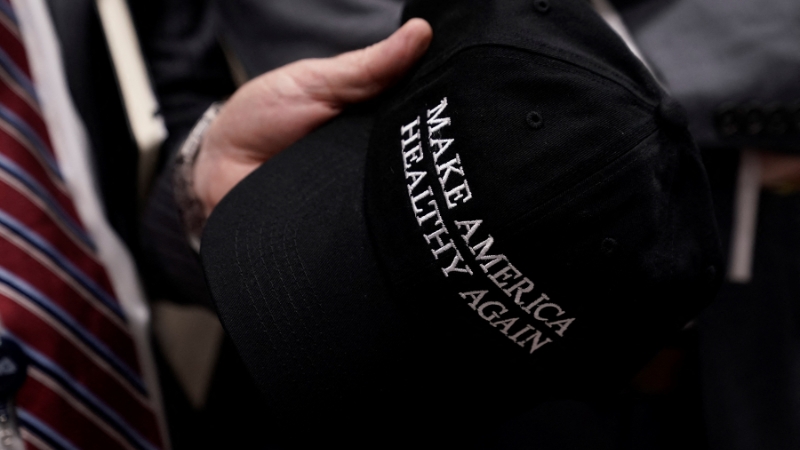
That’s it: nine ways to improve the training of our senior military leaders so that they are focused on winning wars and are not focused on the domains of civilian leaders. Our senior military ranks need more Spartans and fewer Athenians, and the ideas above can lead to that change. Let’s make our War Colleges great again.
Cynical Publius is the nom de plume of a retired U.S. Army colonel and veteran of Iraq and Afghanistan, who became a practicing corporate law attorney after military retirement. You can follow Cynical Publius on X at @CynicalPublius.
Editor’s note: Secretary of War Pete Hegseth responded to this article saying “Completely agree. On it.”