 Image Credit: JEAN-FRANCOIS MONIER / Contributor / Getty Images
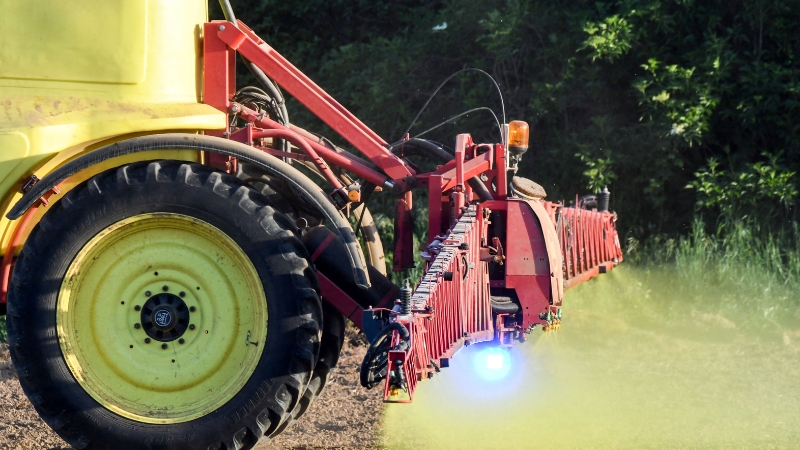
Health Secretary Robert F. Kennedy Jr. has vowed not to give up on pesticide reform, despite President Trump’s Executive Order that critics fear will hand immunity to manufacturers of harmful agricultural chemicals, especially glyphosate.
In a long post on social media, RFK Jr. vowed to “always tell the American people the truth.”
He said he remained committed to reducing and ultimately eliminating the use of harmful pesticides in American agriculture. However, he cautioned that the transition must be gradual and that the administration must work to protect and empower farmers “without destabilizing the food supply.”
“Pesticides and herbicides are toxic by design, engineered to kill living organisms,” the post begins.
“When we apply them across millions of acres and allow them into our food system, we put Americans at risk. Chemical manufacturers have paid tens of billions of dollars to settle cancer claims linked to their products, and many agricultural communities report elevated cancer rates and chronic disease.
“Unfortunately, our agricultural system depends heavily on these chemicals. The U.S. represents 4% of the world’s population, yet we use roughly 25% of its pesticides. If these inputs disappeared overnight, crop yields would fall, food prices would surge, and America would experience a massive loss of farms even beyond what we are witnessing today. The consequences would be disastrous.”
Kennedy defends Trump’s Executive Order, which he says will ensure “defense readiness” and protect the nation’s food supply.
He also notes that President Trump did not create the current agricultural system: “he inherited it.”
“For decades, Washington designed modern agriculture. Policymakers wrote farm policy, directed research dollars, structured subsidies and crop insurance, and shaped commodity markets to reward monocultures and maximum yield. Those deliberate choices locked farmers into chemical dependence and prioritized short-term output over long-term soil vitality and human health.”
Kennedy goes on to say that he is working with the US Department of Agriculture to accelerate “the transition to regenerative agriculture by expanding farming systems that rebuild soil, increase biodiversity, improve water retention, and reduce reliance on synthetic chemicals, including pre-harvest desiccation.”
This includes the adoption of “next-generation technologies, including laser-guided weed control, electrothermal and electrical systems, robotics, precision mechanical cultivation, and biological controls that replace blanket spraying with precision intervention.”
Kennedy ends the post by cautioning Make America Healthy Again’s (MAHA( fundamental reforms of healthcare and agriculture “will not move in a straight line,” because they “test entrenched interests.”
Nevertheless, Kennedy says, Make America Healthy Again under President Trump’s leadership will succeed and “build a stronger, safer, more resilient food supply.”
News of President Trump’s Executive Order to boost domestic production of glyphosate, the nation’s most widely used pesticide, led to dismay from MAHA activists.
The Order says glyphosate is “crucial to the national security and defense, including food-supply security.”
Reuters and other news outlets warned the President could lose the support of MAHA supporters during the midterms.
“I don’t feel like there’s much hope after this executive order in preserving the MAHA vote,” said Kelly Ryerson, co-executive director of American Regeneration and a critic of glyphosate use.
A petition to Trump being circulated by the MAHA group Moms Across America urges him to revoke the order.
“True national security is healthy families and the ability of the next generation to reproduce and thrive, which will not happen for as long as these pervasive, harmful herbicides are being used,” the petition said.
If you want to know more about glyphosate and why it’s so bad, read our exclusive primer on America’s most widely used pesticide here.