 Image Credit: Anadolu / Contributor / Getty Images
China is continuing to import large quantities of Iranian oil by means of a “backdoor” route that bypasses the Strait of Hormuz.
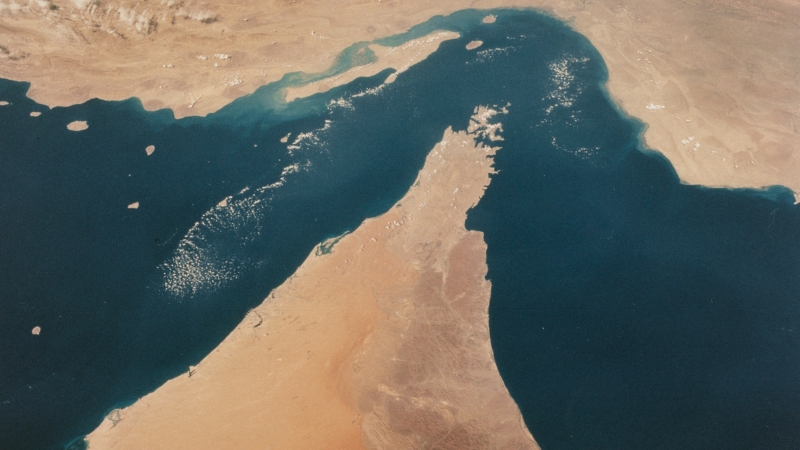
Traffic through the vital Strait of Hormuz, which normally carries around 20% of global oil exports, has been severely affected by the ongoing US-Israeli “Operation Epic Fury” against Iran.
Insiders and business analysts who spoke to The Epoch Times said Chinese oil tankers are being loaded directly in the Gulf of Oman, by means of Iran’s southeastern port of Jask.
Chinese oil shipments have been largely unaffected by the conflict, according to one insider.
“Since the outbreak of the war, Iranian crude arriving at ports in [China’s] Shandong and Zhejiang has continued almost normally,” the source said.
The source explained that Beijing and Tehran had contingency planning on place for the closure of the Strait of Hormuz.
“Before the war began, Beijing had already reached an understanding with senior Iranian officials about how to move oil to China if the situation spiraled out of control. Most of Iran’s exported crude ultimately ends up in the Chinese market.”
In the days before the conflict began, the source continued, Chinese officials circulated a strategic memo calling for preparation for two possible scenarios: the first involving the loss of most or all Iranian oil, sand the second involving emergency measures to import more Russian oil.
According to some, Iran’s crude exports have actually increased as a result of the conflict.
In an X post on March Friday, Financial research platform Global Markets Investor claimed Iran’s crude exports have averaged about 2.1 million barrels per day since the war began, more than the roughly 2 million barrels per day exported before the conflict.
Other sources told The Epoch Times that China’s continuing oil purchases “provide Tehran with a critical economic lifeline during the conflict,” and are a form of “financial support.”
China appears to have begun preparations for an alternative oil-transport route some years ago. These efforts included the construction of a 1,000 km pipeline to the Jask terminal. The project was part of a 25-year cooperation deal signed by China and Iran in 2021.