 Image Credit: Kent Nishimura / Stringer / Getty Images
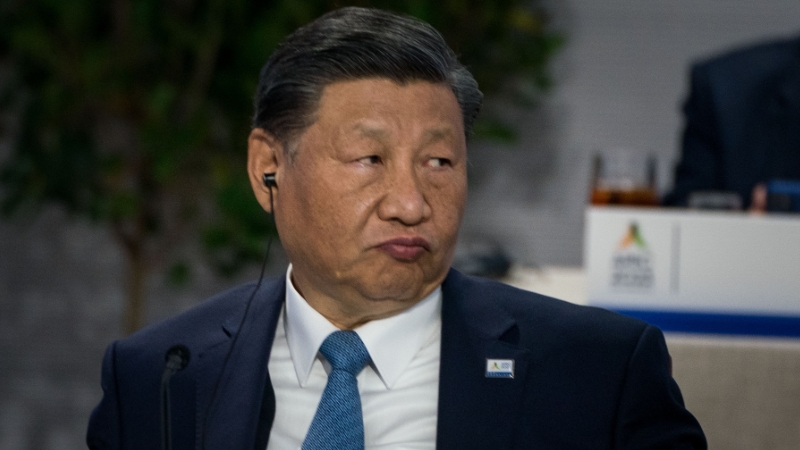
President Trump has threatened “big problems” for China if they re-supply Iran with weapons, including air-defense systems, while the US is still at war.
“If China does that, China is gonna have big problems, OK?” Trump said to a press gaggle outside the White House.
Intelligence sources have warned that Beijing is preparing to send shoulder-launched missiles, or MANPADs, to Iran in the coming weeks, and would do so via third parties in an attempt to hide the origin of the weapons.
These weapons have heat-seeking capabilities and were a major annoyance for US forces during the six-week war, which is currently on hold as a two-week ceasefire takes place.
A MANPAD almost took out an F/A-18 Super Hornet jet last week, and an F-15 shot down by Iran was apparently hit by a shoulder-launched missile.
China has denied claims it wants to resupply Iran, saying they are “entirely fabricated.”
“As a responsible major country, China always abides by international law and its international obligations, and never provides weapons to any party to the conflict,” the Chinese embassy said in a statement.
“China firmly rejects the circulation of speculative, misleading, and false information targeting China.”
Iran’s Foreign Minister Abbas Araghchi has maintained China and Russia have both provided “close cooperation” with the Islamic regime in Tehran throughout the war.
“Russia and China are our strategy partners, and we have had close cooperation in the past, which is still continues [sic], and that includes military cooperation as well,” Araghchi told MS Now.
This morning, President Trump suggested a naval blockade could be used to bring Tehran to heel if negotiations fail.
On Truth Social, President Trump reposted a new article that said a naval blockade could be used weaken the Iranian regime, just as he did with Venezuela before ousting President Nicolas Maduro.
“If Iran refuses to accept the final deal the United States offered Saturday, Trump could bomb Tehran back to the ‘Stone Ages’ as he vowed,” the article states.
“Or he might just reprise his successful blockade strategy to choke an already teetering Iranian economy and ratchet up diplomatic pressure on China and India by cutting them off one of their key sources of oil.
“Ironically, the massive USS Gerald Ford carrier that led the Venezuelan blockade is now in the Persian Gulf after a brief hiatus for repairs and crew rest after a deadly fire. And now it joins the USS Abraham Lincoln and other major naval assets.
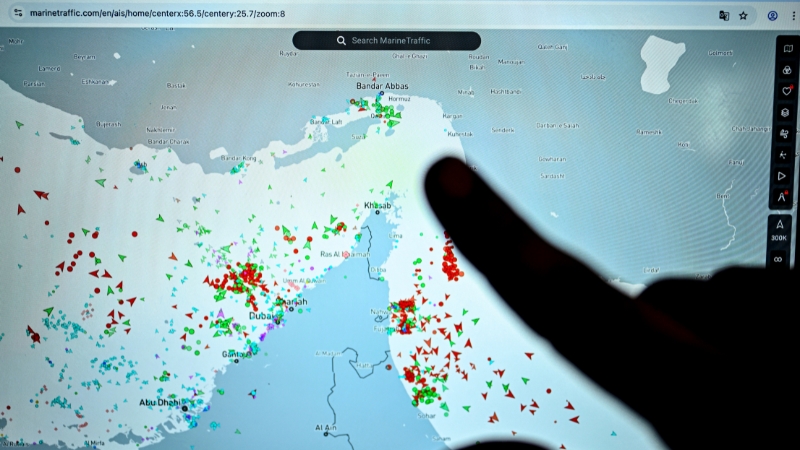
“In short, Trump simply could out-blockade Iran’s hold over the Strait of Hormuz, experts said.”
President Trump offered no comment on the article, merely reposting it—but the implication was clear.
On Saturday, Vice President JD Vance arrived in Pakistan to negotiate with the Iranians.
After nearly a full day of negotiation, in a terse statement Vance said the Iranian delegation had rejected US terms.
“We have been at it now for 21 hours, and we’ve had a number of substantive discussions with the Iranians. That’s the good news,” Vance said.
“The bad news is that we have not reached an agreement, and I think that’s bad news for Iran much more than it’s bad news for the United States of America.”
The talks began four days after President Donald Trump agreed a two-week ceasefire with Iran.
According to Vance, the main stumbling block was Iran’s refusal to abandon its nuclear ambitions.
Before the meeting, Iran submitted a list of ten proposals. President Trump did not agree to the proposals, but said they were a “workable basis” for negotiations.