 Image Credit: Mattel via Reuters / @ABC / X screenshot
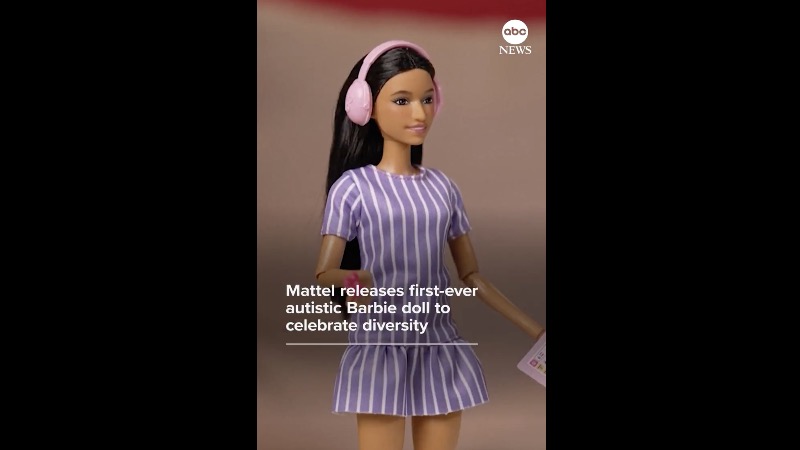
After over 18 months of development, toymaker Mattel debuted their new autistic Barbie doll.
Barbie was first introduced in 1959. At that time she was manufactured to appear as fictional version of a physically healthy and mentally competent woman. Being a doll, her thin yet large-busted physique was exaggerated for dramatization purposes, although the image of Barbie served as a role model for girls to aspire to.
“…the first doll mimicking the glamour of 1950s stars such as Elizabeth Taylor and Marilyn Monroe,” History.com said.
Following a decade of hoeflation and retardation in pop culture, Barbie is now afflicted with “a touch of the ’tism”.
She joins her fellow crippled and retarded sisters, including a down syndrome Barbie, a blind Barbie, a homosexual Barbie, a diabetes Barbie, a bald cancer-ridden chemotherapy Barbie, a Covid vaccine Barbie and a Barbie and Ken with vitiligo (Ken is the male Barbie).
Reportedly, making Barbie autistic was not an easy task.
“That was a challenge because autism encompasses a broad range of behaviors and difficulties that vary widely in degree, and many of the traits associated with the disorder are not immediately visible, according to Noor Pervez, who is the Autistic Self Advocacy Network’s community engagement manager and worked closely with Mattel on the Barbie prototype,” the AP said Monday.
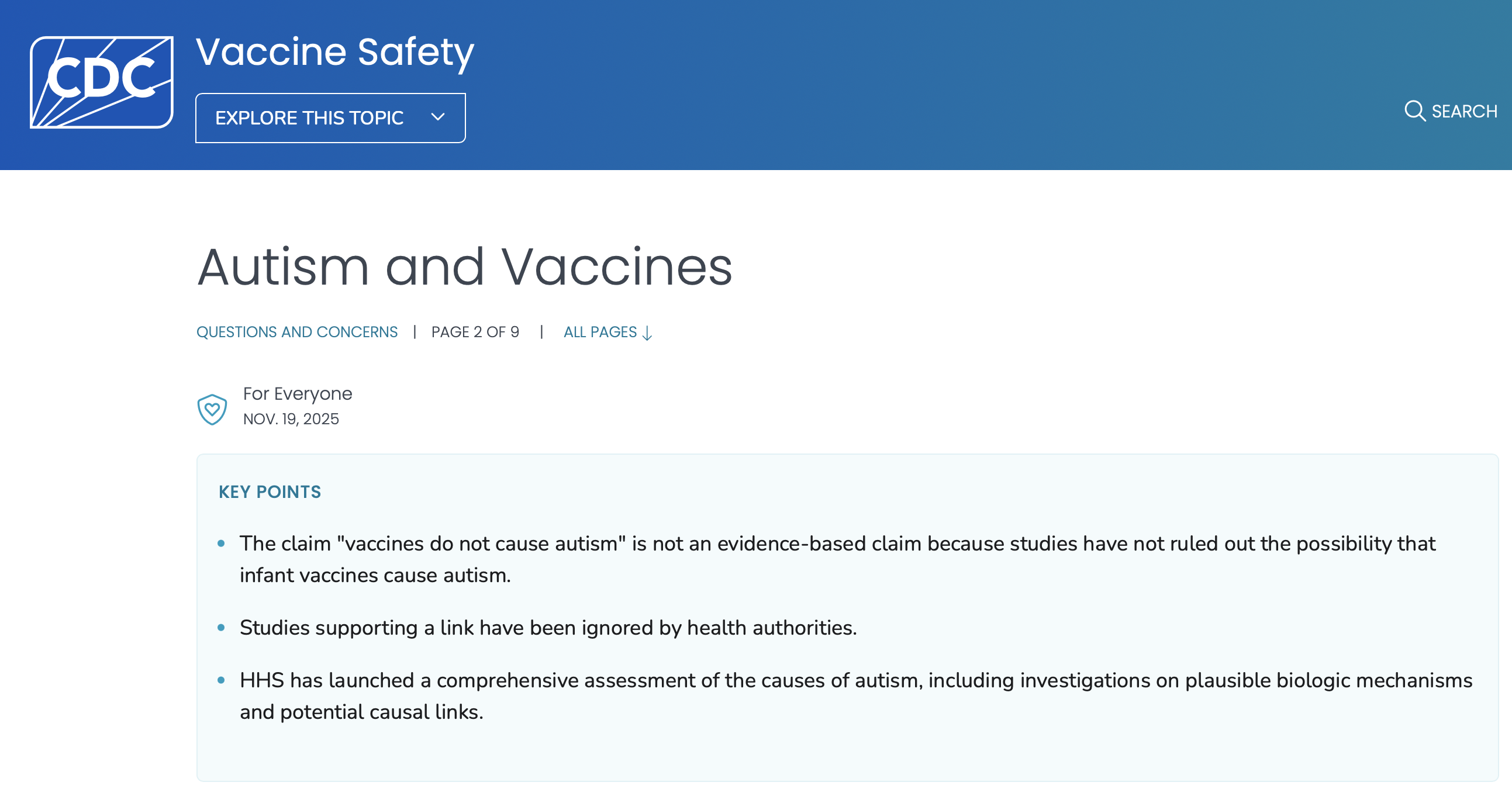
Interestingly, in the aforementioned quote from the AP’s autistic Barbie article, the AP linked their article about the Centers for Disease Control (CDC) changing their website to read “The claim ‘Vaccines do not cause autism’ is not an evidence-based claim,” despite the autistic Barbie article not discussing vaccines at all.
Coincidentally, the timing of Barbie’s autism diagnosis comes as the Trump administration significantly reduced the number of recommended vaccines for children and infants. Vaccines have been scientifically proven to increase the risk of autism.