 Image Credit: NatanaelGinting / Getty
Australian state governments are enrolling residents into facial recognition systems, framing the rollout as a convenience upgrade. The mechanics are worth examining closely, especially as other countries are looking to Australia’s model as one to inflict on their own citizens.
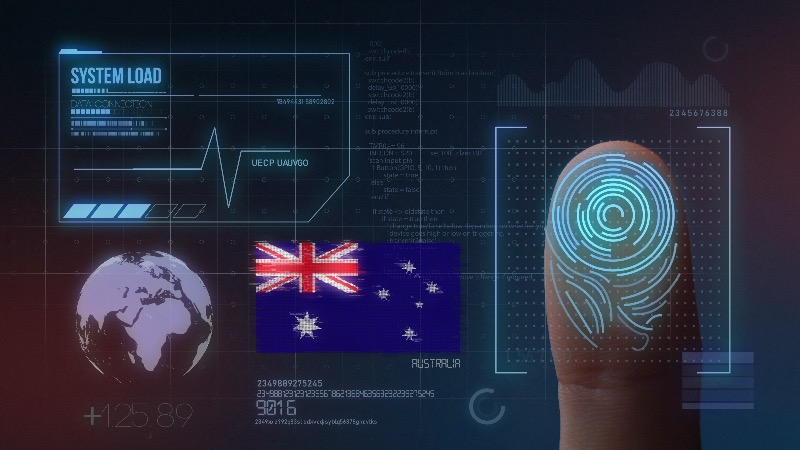
New South Wales is furthest along. Through Service NSW, the state now offers a Digital ID that works like this: you hand over a driver’s license or passport, the system authenticates the document, then captures a live selfie and compares your face against the document photo. Once the match clears, you get a reusable credential for accessing state services online.
It’s the same process banks and telcos use to onboard customers remotely. The difference is that the state runs it, controls the credentials, and decides how far it reaches.
NSW Minister for Customer Service and Digital Government Jihad Dib described the initiative as a privacy improvement, stating: “So much of our personal information is overshared when we hand over documents, but NSW Digital ID gives you more privacy and control to share only the information you need to.”
That claim deserves scrutiny. The system doesn’t replace document sharing with something lighter. It replaces document sharing with biometric enrollment and persistent credential storage, all managed by the government.
The minister is right that you won’t hand over your full passport every time you access a service. What you hand over instead is your face, matched to state records, converted into a mathematical template that the system retains.
That template confirms your identity on demand. It also sits in a database, subject to whatever retention and access policies the government sets now and changes later.
NSW has been collecting biometric and identity data through this pathway since it piloted the program with a digital photo card in 2025. Photo card holders became eligible for the Digital ID trial shortly after, widening the pool of residents whose faces are now in the verification stack. Each expansion grows the biometric database alongside it.
The system already connects to federal records. According to agency documentation, identity data submitted during verification may be cross-referenced against records held by the Attorney-General’s Department, Services Australia, and Transport for NSW.
Service NSW says only minimal personal information is exchanged to confirm eligibility. Minimal is doing a lot of work in that sentence. When biometric face matching and multi-agency database checks are both involved, “minimization” is a technical constraint, not a policy promise. What actually gets shared depends on implementation, and implementations change.
The practical scope of the NSW system starts narrow, intentionally. An early service lets residents link a toll account and claim rebates online.
Residents aged 16 and over can enroll using a selfie matched against approved documents, including birth certificates. The access point is the MyServiceNSW platform, separate from the federal myID system, which was rebranded from myGovID after Parliament passed the Digital ID Act 2024. NSW runs its own stack and its own rules.
What NSW is building toward is a reuse model. After completing identity proofing once, residents shouldn’t need to resubmit documents each time they interact with the state. That logic is accurate and convenient. It’s also how you build a centralized biometric identity system that becomes harder to opt out of as it expands. The government calls it reducing repeated data exposure. It’s also consolidating identity functions into a single persistent framework. Both things are true.
Queensland is on a parallel track, with less biometric ambition but more reach. Its Digital License app already carries mobile driver licenses, marine licenses, and photo ID cards, used by more than 1.2 million residents.
The state recently expanded the app to include driver trainer and motorcycle rider trainer accreditations, adding more than 105,000 tradespeople to the platform. Queensland Building and Construction Commission licenses were already included.
Technical infrastructure support comes partly from Thales, a defense and security contractor. Part of the backend for Australia’s expanding state identity systems runs on private sector surveillance infrastructure.
More: The Biometric Payment Revolution You Never Agreed To
Victoria has added digital birth certificates, extending the national footprint. Digital driver licenses are expected to reach around 90 percent of eligible Australians this year.
The pattern across every jurisdiction is the same. Document validation, biometric matching, and app-based credential storage are being assembled into reusable identity ecosystems that residents will access repeatedly for years.